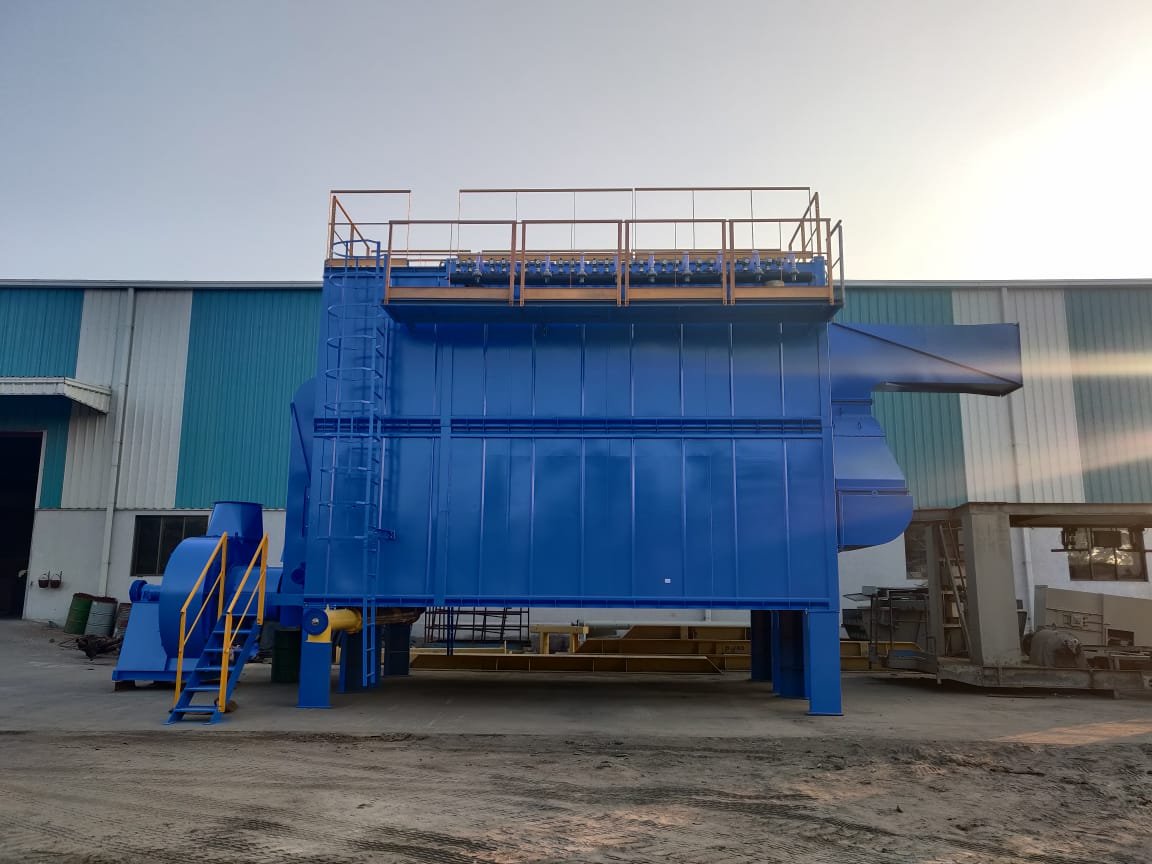
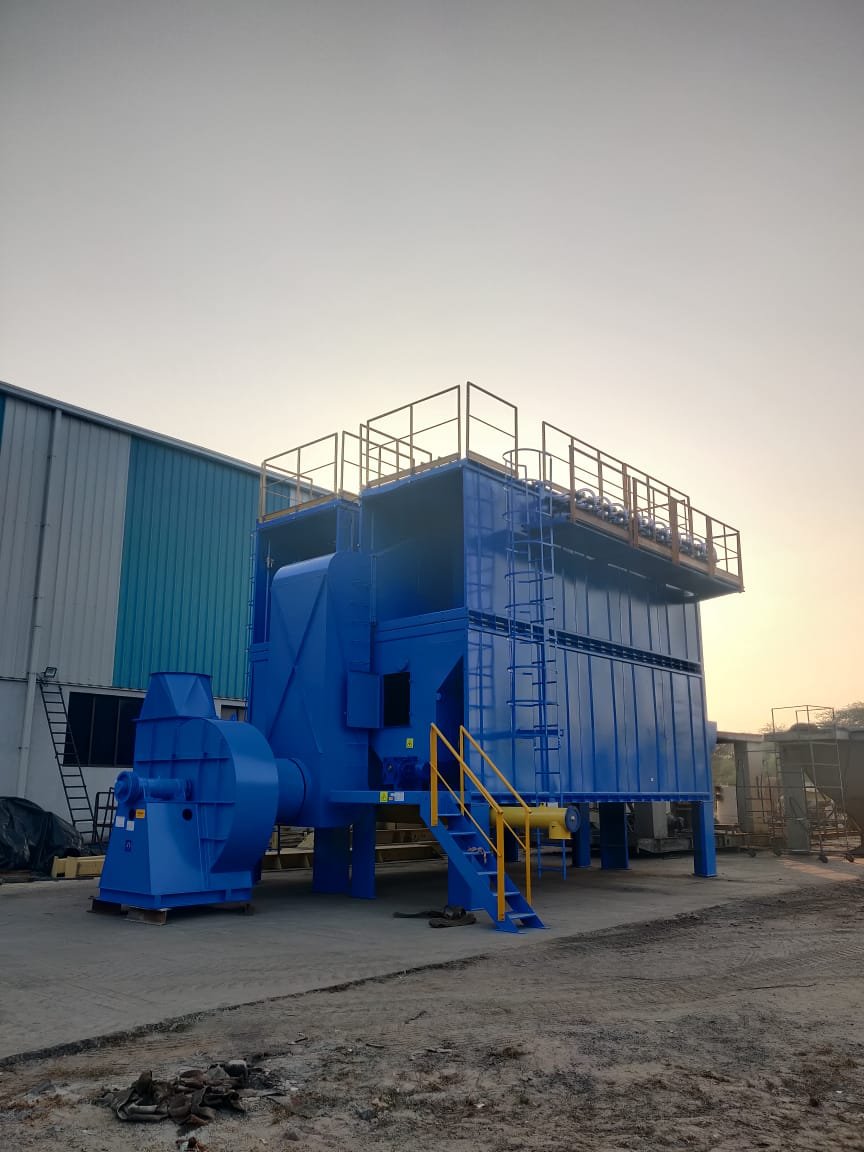
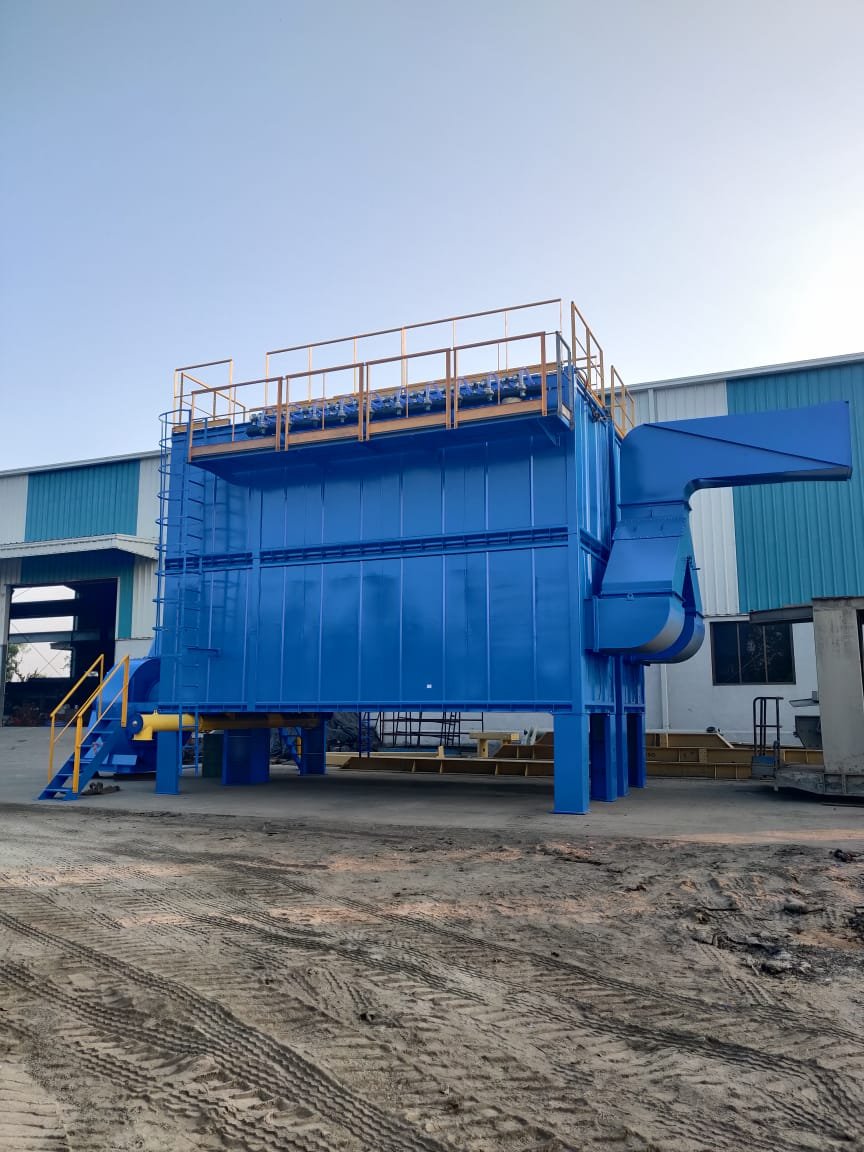
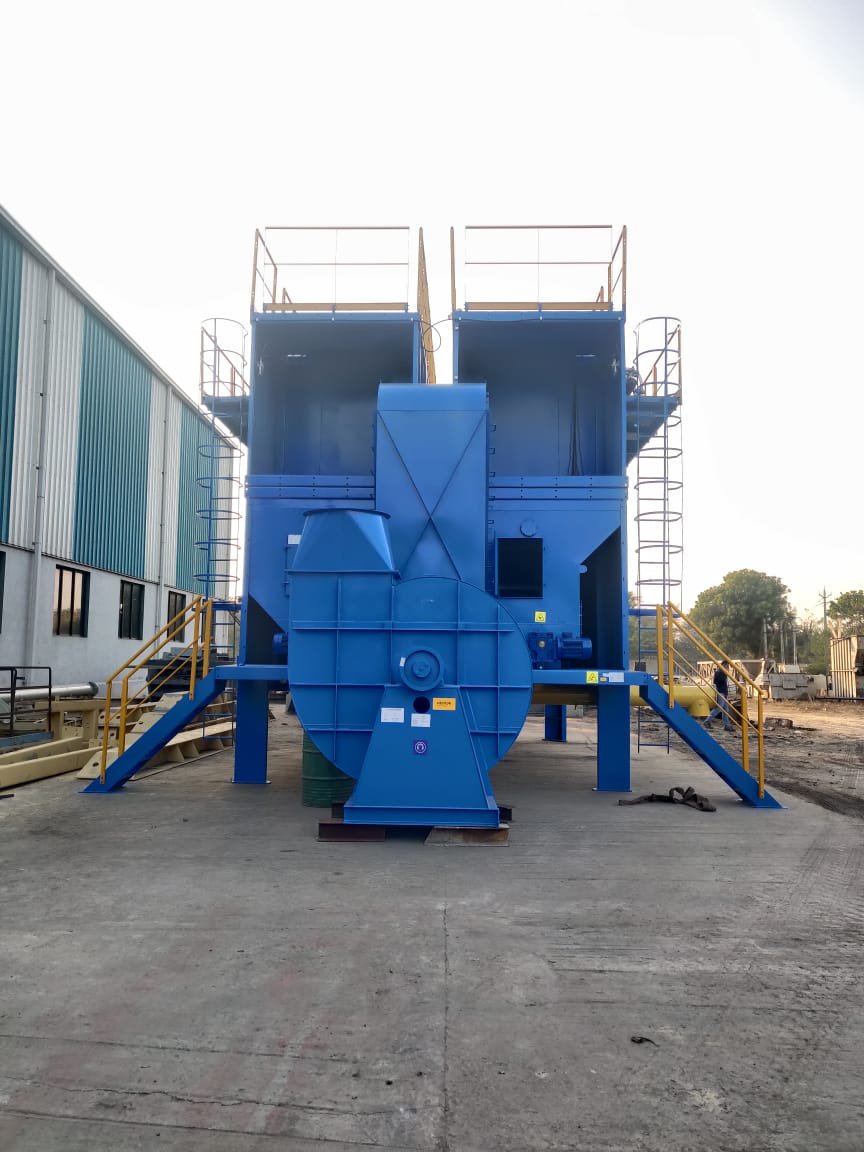
BAG HOUSE FILER
A Bag- House Filter, known as Bag Filter the is an air pollution control device and dust collector that removes
particulates or gas released from commercial processes out of the air.
The Bag Filters have elongated cylindrical fabric bags which are used to collect the minute dust passing through the cleaning area.
This Bag Filter has dual features namely Pulsejet and Reverse Air Flow System which could be operated whenever needed.
This Baghouse Filter’s exhauster capacity is 85,000 m³/hr.
The total weight of this unit is approx. 23 tons.
Reverse Air Flow Baghouses
- In reverse-air baghouses, the bags are fastened onto a cell plate at the bottom of the baghouse and suspended
from an adjustable hanger frame at the top.
- Dirty gas flow normally enters the baghouse and passes through the bag from the inside, and the dust collects on the inside of the bags.
- Reverse-air baghouses are compartmentalized to allow continuous operation. Before a cleaning cycle begins, filtration is stopped in the compartment to be cleaned.
- Bags are cleaned by injecting clean air into the dust collector in a reverse direction, which pressurizes the compartment.
- The pressure makes the bags collapse partially, causing the dust cake to crack and fall into the hopper below. At the end of the cleaning cycle, reverse airflow is discontinued, and the compartment is returned to the main stream.
- The flow of the dirty gas helps maintain the shape of the bag. However, to prevent total collapse and fabric chafing during the cleaning cycle, rigid rings are sewn into the bags at intervals.
- Space requirements for a reverse-air baghouse are comparable to those of a shaker baghouse; however, maintenance needs are somewhat greater.
Pulse Jet Baghouses
- In reverse-pulse-jet baghouses, individual bags are supported by a metal cage (filter cage), which is fastened onto a cell plate at the top of the baghouse. Dirty gas enters from the bottom of the baghouse and flows from outside to inside the bags.
- Bags are cleaned by a short burst of compressed air injected through a common manifold over a row of bags. The compressed air is accelerated by venturi nozzle mounted at the reverse-jet baghouse top of the bag.
- Since the duration of the compressed-air burst is short (0.1s), it acts as a rapidly moving air bubble, traveling through the entire length of the bag and causing the bag surfaces to flex.
- Reverse-pulse-jet dust collectors can be operated continuously and cleaned without interruption of flow because the burst of compressed air is very small compared with the total volume of dusty air through the collector.
- The short cleaning cycle of reverse-jet collectors reduces recirculation and redeposit of dust. These collectors provide more complete cleaning and reconditioning of bags than shaker or reverse-air cleaning methods.